In 1970, I was thirteen, and Germany
might as well have been another planet
three months in—
still alien.
Foreign sounds,
foreign smells,
foreign foods.
h
Our first Christmas
without New Jersey.
A holiday potluck
at someone else’s house.
Inside:
warmth, laughter,
voices spilling over each other,
a kitchen counter crowded
with casseroles and desserts,
a room fizzing with drinks—
wine and beer for the grown-ups,
a soda for kids like me.
My brother vanished with a classmate.
Mom and Dad found their friends.
I wandered, holding a tray of
potato chips and onion dip
like a passport.
In the living room—
a man standing off by himself.
faded jeans, button-down oxford,
suede chukka boots,
Grandfather-age,
neat mustache like my dad’s.
Not lonely.
Unattended—confident.
He didn’t need a circle of friends
to belong.
I walked over
and did what I was taught
about making friends:
I held out my hand.
Hi, I’m Bruno.
He looked me square in the eyes,
took my hand in both of his—
firm, steady—
and said, unhurried:
I’m Sidney. Nice to meet you.
Army? I asked.
Yes, he said.
We talked the way a boy
talks with an older man—
not trying, not performing,
just letting questions and answers
find each other.
He spoke fluent German,
asked what I knew.
I offered
entschuldigung and verheiratet,
two words I could carry without wobbling.
He smiled,
said my pronunciation was good.
A small compliment,
landing on a thirteen-year-old
like a medal.
I had just read
The Rise and Fall of the Third Reich,
a history heavy enough
to bend my spine.
Did you fight? I asked.
Yes, he said.
Then, after a beat—
there have been
several wars since then.
I told him
I was glad Hitler was dead,
clean and final
the way kids say things
when they want to sound confident.
He agreed, but didn’t let it end there.
He added:
a person like Hitler should never
be allowed to be a leader.
But we can never blame
one man for a war.
Remember:
he could never be a leader
without thousands of other people
to support him—
People who agreed,
or were afraid,
or had other plans.
We can’t change the past, he said.
Your generation needs to remember
and make sure it never happens again.
As I was turning that over
like a stone in my pocket,
a tall, familiar man in uniform
walked toward us.
Pleased with myself,
pleased with this easy friendship
I’d stumbled into,
I eagerly introduced him:
Hi, Lieutenant Taylor.
This is my friend Sidney.
The lieutenant’s face changed—
as if I’d given the wrong answer in class.
I need to speak to you.
He guided me
to the other side of the room.
My stomach churned—
I want you to go back
and apologize.
For what?
You disrespected
the general.
General—
suddenly the whole evening shifted.
I walked back,
blushing.
I’m sorry, sir,
I didn’t know who you were.
He studied me for a moment,
noting my embarrassment.
That’s all right.
I’m in civilian clothes.
I don’t carry rank
unless I’m in uniform.
His mouth twitched—
almost a smile.
Young man,
if I’m in uniform,
you’ll address me
as General Gritz.
His voice dropped,
a secret instead of a reprimand—
in private—
when I’m in sneakers and jeans—
I’m just Sidney.
Now, shake hands with me
so the lieutenant
will stop bothering us.
What he gave
was more than a conversation,
firm handshake, kind eyes.
He gave me the friendship
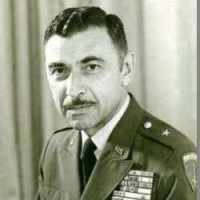
of Brigadier General
Sidney Gritz.
I saw him now and then
over the next few years—
always in uniform—
at the movie theater,
at a basketball game,
in the mess hall.
Once,
in my ROTC uniform,
hair in curly collar-length waves,
I had the honor of saluting him.
He stopped.
Shook my hand.
Looked me over,
checking to see
a boy growing
into manhood.
I don’t like your haircut,
he said,
but I’m proud
to see you’re doing well.
In 1945, Sidney Gritz
was a young Jewish American officer
wearing the patch of Patton’s Third Army,
leading Black and white soldiers
wearing the same uniform—
combat engineers
clearing mines
as the German army withdrew
toward Berlin,
making the ground safe
for the next step.
Near the end of the war,
he reached Buchenwald.
Afterward
he couldn’t describe it
without a quiet pause first,
as if language itself
needed a moment
to stand at attention.
He would speak clearly and simply:
those prisoners were
nothing but skin and bones—
skin and bones.
The warmth of it—
the correction, the praise—
stayed with me:
rank set aside,
a name made human—
Sidney.
© 2026 Bruno Talerico
77/365
Image from the internet.


Leave a Reply